Back then, I did not know any of this. So I tried everything else first. Here is how it went, in order.
Option 1
Painkillers (ibuprofen, naproxen, Tylenol)

When the pain first started, I did what almost everyone does. I reached for painkillers.
At first they seemed to work. Three ibuprofen got me through eight or ten hours, so I thought I had found my answer. That part is true. On a bad day, they helped.
But that is all they do. They lower the pain you feel. They do nothing to the muscle that is pressing on the nerve. So after a few hours the relief runs out and the pain comes back. And taken often, they can hurt your stomach and your kidneys, and Tylenol can hurt your liver.
They cover the pain. They never touch the muscle causing it.
Pros
- Cheap and everywhere
- Buys you a few working hours
Cons
- Only masks the signal, never touches the tight muscle causing it
- Hard on your stomach at the doses it takes
"Fine for getting through a bad day. Never a real answer for what is actually going on."
Option 2
The stretches everyone is told to do

When the pills were not enough, I started searching for anything that might help. The advice I found again and again was to stretch.
Stretching can help. It loosens a tight muscle for a little while, and for some people that is enough. For me it felt better for a few minutes.
But the good feeling never lasted. And here is the problem. My nerve was already being squeezed. When you stretch, you pull on the muscle that is squeezing it. Pulling on a nerve that already hurts can make it worse, not better.
Most days, stretching left it worse than before.
Pros
- Free, no equipment
- Genuinely helps some muscular cases
Cons
- For an irritated sciatic situation it can flare you up worse
- Easy to overdo and set yourself back
"For a lot of us, the one thing we were told would help quietly made it worse."
Option 3
Foam rollers and massage balls

When stretching did not help, I decided I needed to get at the muscle harder. So I got a foam roller and a massage ball.
They feel great for about ten minutes. Rolling on a tight muscle can loosen it fast, and studies show it helps for a short time.
But short is the key word. The good feeling fades fast. And a roller pushes down hard on a spot that is already sore and swollen. More than once I felt fine at night and woke up worse.
A foam roller has the same problem as stretching. Both work the muscle from the outside, and both only help for a few minutes. The piriformis sits deep under the big muscle of your buttock. Pressing or pulling on the top does not hold that deep muscle open, so the squeeze on the nerve keeps coming back.
You cannot fix a squeezed nerve by pushing down harder on it.
Pros
- Cheap, and it feels great in the moment
- Can loosen a purely muscular knot
Cons
- Bears down on an already irritated spot, so it can leave you worse the next day
- Easy to overdo on a spot that is already inflamed
"It felt incredible for ten minutes. Then I paid for it the next morning. I was pushing down on the problem."
Option 4
Heating pads and ice packs

By then I was worn down and losing hope. I went back to the simplest thing there is. Heat and ice.
Both felt nice. Heat warms the area and helps the muscle relax. Ice makes the spot go numb for a while. Each one helped for a little while.
But the relief only lasted about an hour. Heat and ice reach the skin and the top layer. They never reach the muscle deep in the buttock that was pressing on the nerve.
Once they wore off, the tightness and the pain came right back.
Pros
- Soothing and cheap, always on hand
- Takes the edge off a bad hour
Cons
- Warm or cold, it only touches the surface, never the tight muscle underneath
- The relief fades in an hour, and no one even agrees whether hot or cold is right
"Comforting for an hour. But I was just guessing hot or cold, and the tightness never actually moved."
After two years and everything on that list, I had run out of ideas. I started to believe my sciatica was just something I would have to live with for the rest of my life.
Then I learned my sciatica was not hopeless
Most sciatica gets better on its own over time. That part is well documented, and it is what finally gave me hope. The body is built to heal. Mine was never the hopeless kind.
So why did nothing I tried ever work?
Because chronic sciatica is not a stretching problem. Deep in your hip, a muscle called the piriformis has gone into a 4-Point Lock. Four things are happening in it at the same time:
- →It is clamped down on the sciatic nerve, and every time you press it, it guards harder
- →It is choked of blood flow, so it stays tight and cold
- →It snaps straight back into that guard the moment you stop
- →The tissue never gets the circulation it needs to settle and recover
Stretching touches none of those four. A foam roller touches none of them either. It just presses harder on the lock. Look closely and all four come back to one thing. That muscle is not getting the blood flow it needs. Bring the blood back into it, and all four start to let go, so it can finally settle and your body can do the rest.
What finally worked
Option 5
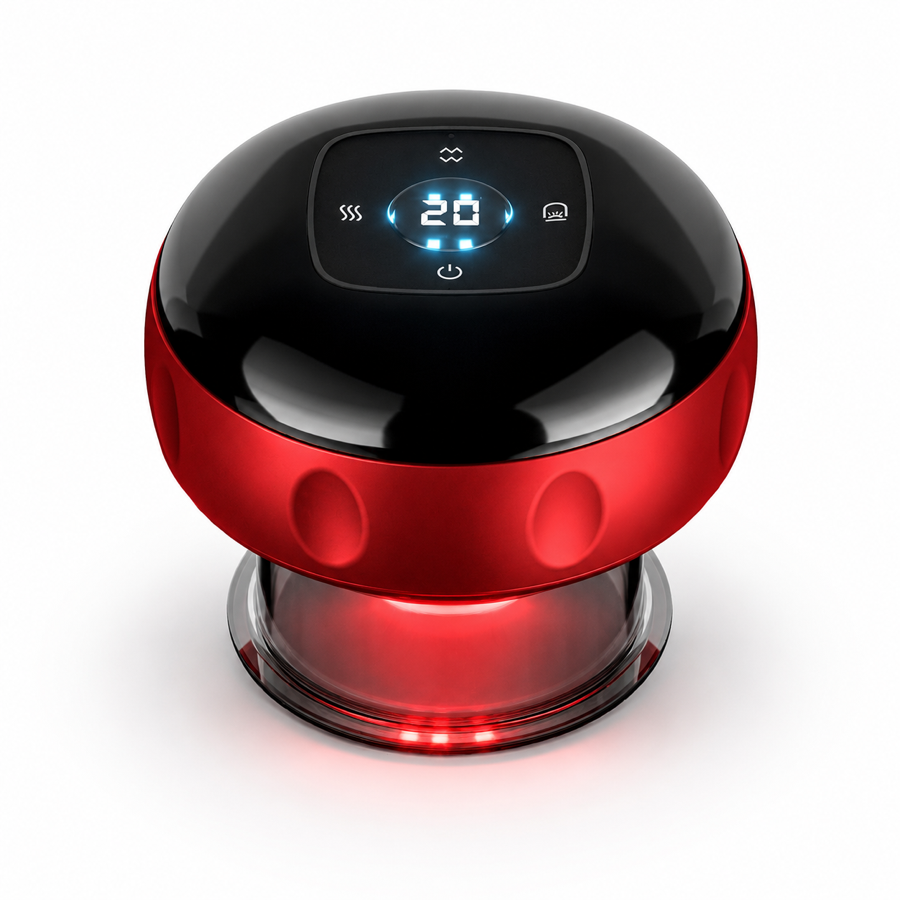
The Cordia Smart Cupper

That was when my neighbor Susan showed me her Cordia Smart Cupper. She had fought her own sciatica for years. It did not press down on the sore muscle. It did the opposite. It gently pulled fresh blood into it.
Here is why it worked when nothing else did. A tight muscle like that does not need more pressure. It needs fresh blood, and lots of it. The gentle suction floods the muscle with fresh blood, and fresh blood is what lets it finally loosen and stop pressing on the nerve. That is the whole idea behind the Cordia, and it drives that blood flow four ways at once.
Pros
- Brings fresh blood into the muscle instead of pressing or numbing it
- Warms and works the spot in one 15-minute session, drug free
- One-time cost instead of endless pills and visits
Cons
- Only available online, not in stores
- The suction feels strong the first minute if you have never tried cupping
"The first thing that did the opposite of everything else, and my first mornings in years standing up without that jolt."